

Human Identity Governance
Human identity governance, built on real usage
Right-size access for every employee, contractor, and partner, from day one to departure, based on real usage and peer context.
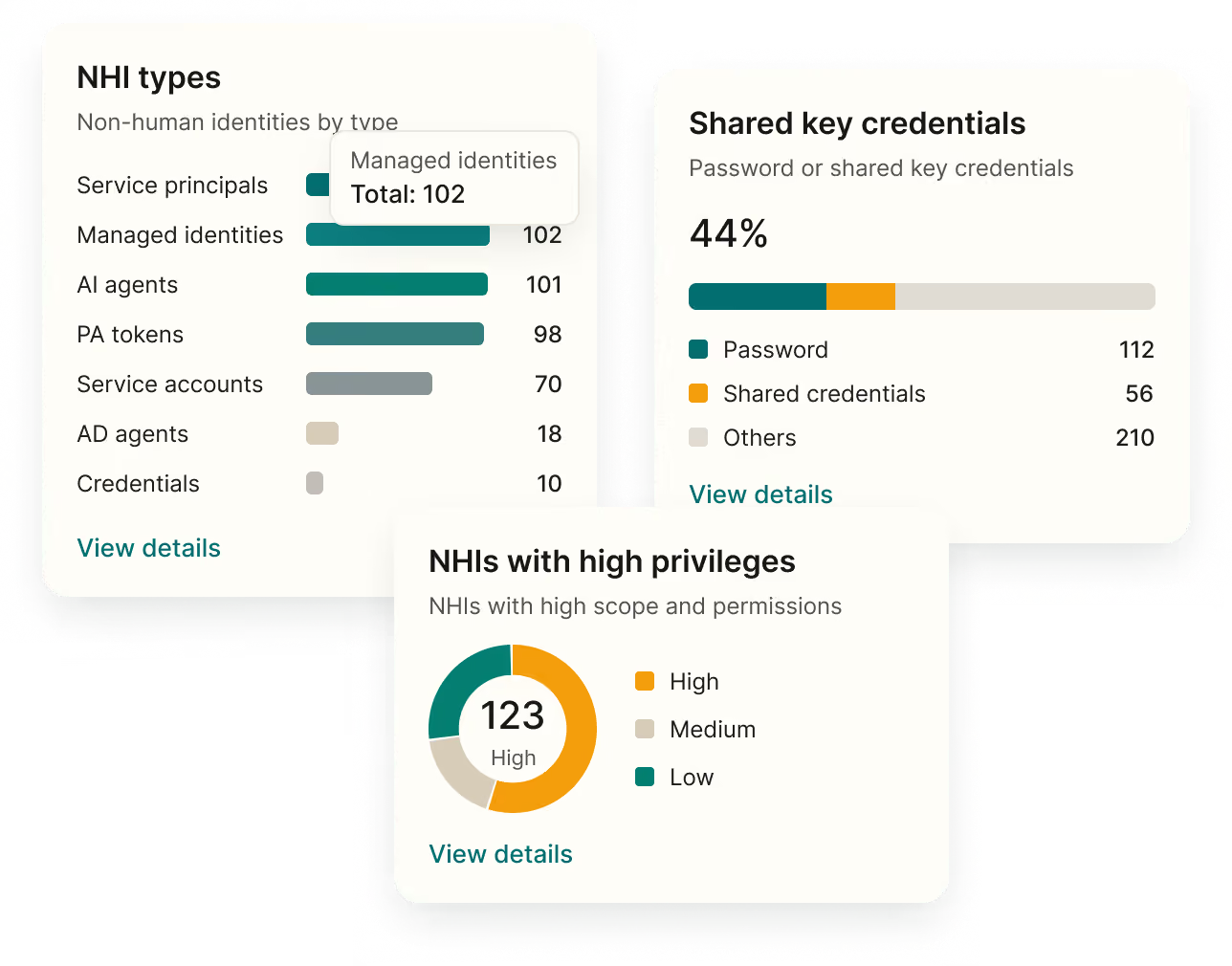
Access reviews have
become rubber stamps
Legacy IGA governs static roles, not real use. Access piles up, and
reviewers approve what they can’t judge.
Access only grows
Every project and role change adds access. Little of it is ever removed.
Reviews without context
Reviewers see a list of entitlements, not whether anyone uses them.
Roles go stale
Role definitions drift out of date months after they’re built.
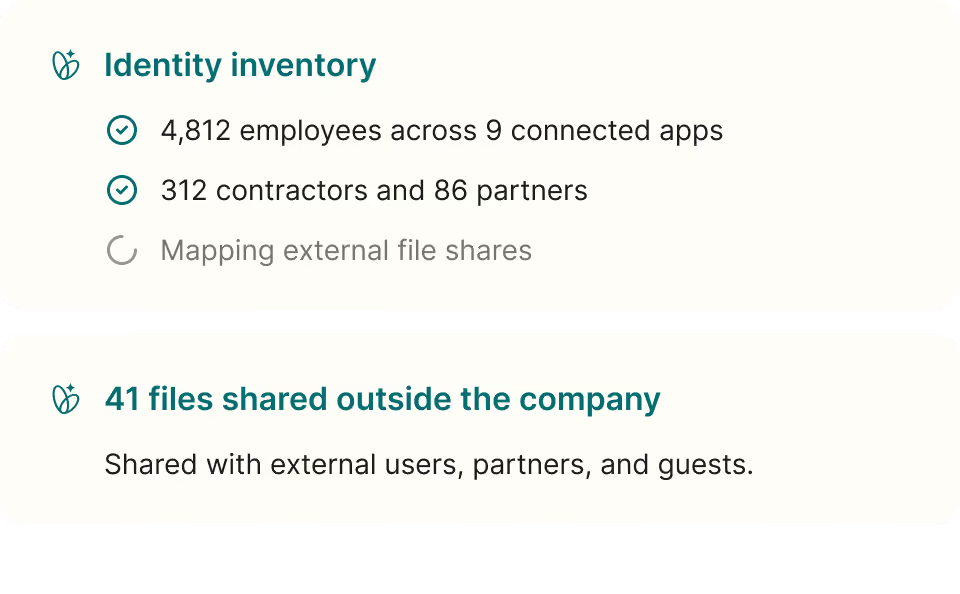

Every employee, contractor, and partner in one view

Every account, group, and permission
See every account, group, and permission across your connected IdPs and SaaS apps.

Files shared outside the company
Including files shared with external users, partners, and guests.
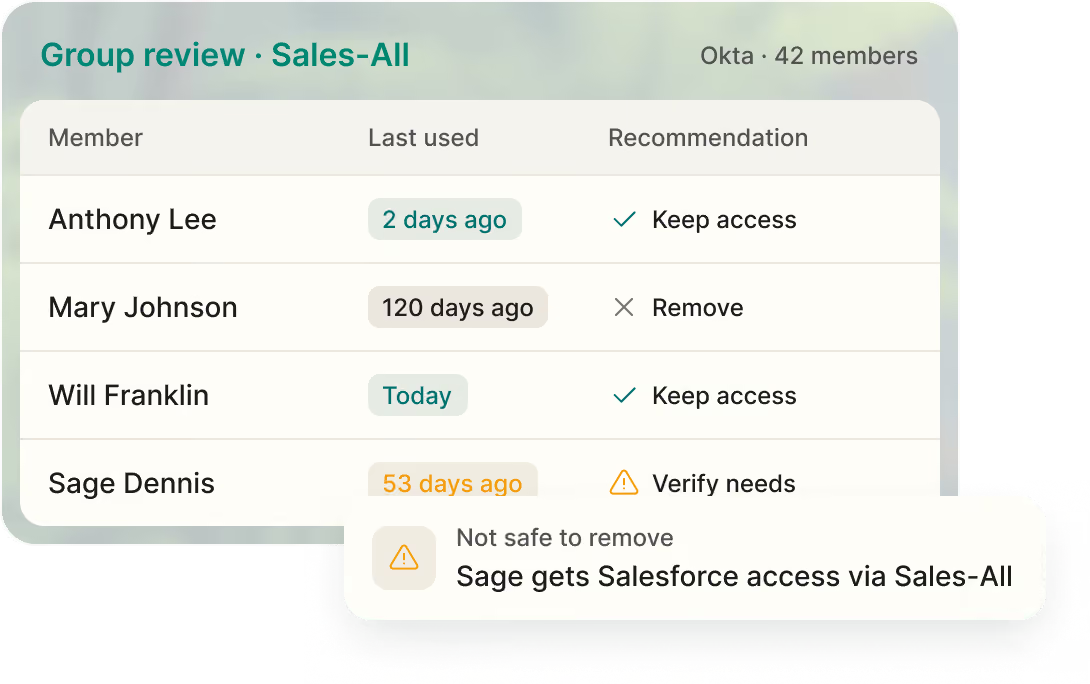

End rubber-stamped access reviews

Context on every line
Every line shows usage, dormancy, and peer comparison with a clear recommendation.

Safe removal
When access is rejected, Oleria flags anything that can’t be removed safely.
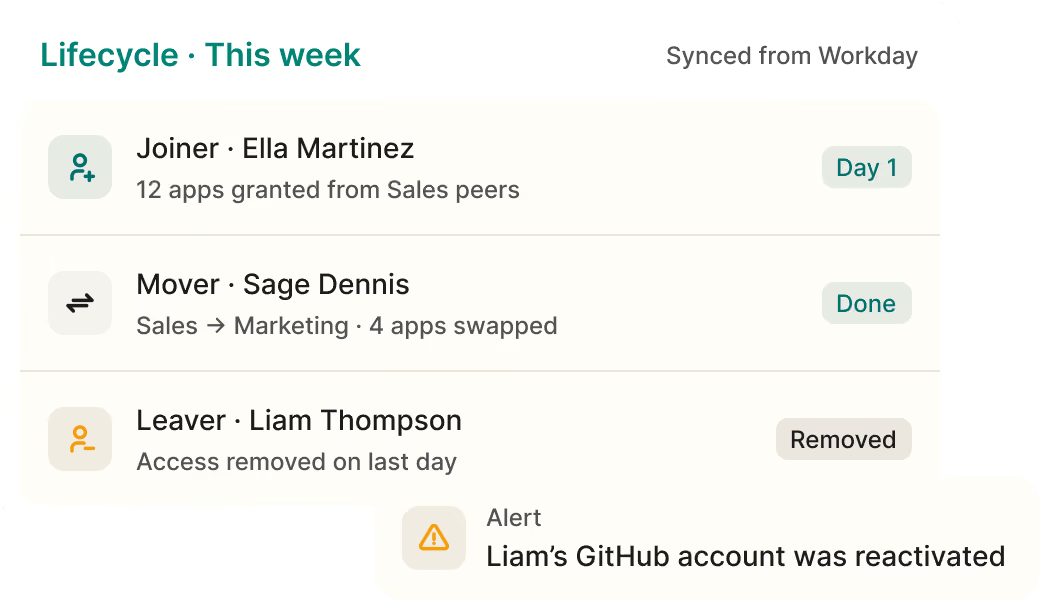

Automate every joiner, mover, and leaver
Joiners
New hires get the access their peers have on day one.

Movers
Movers swap old access for new.

Leavers
Leavers lose access on their last day, with alerts if an account is reactivated.
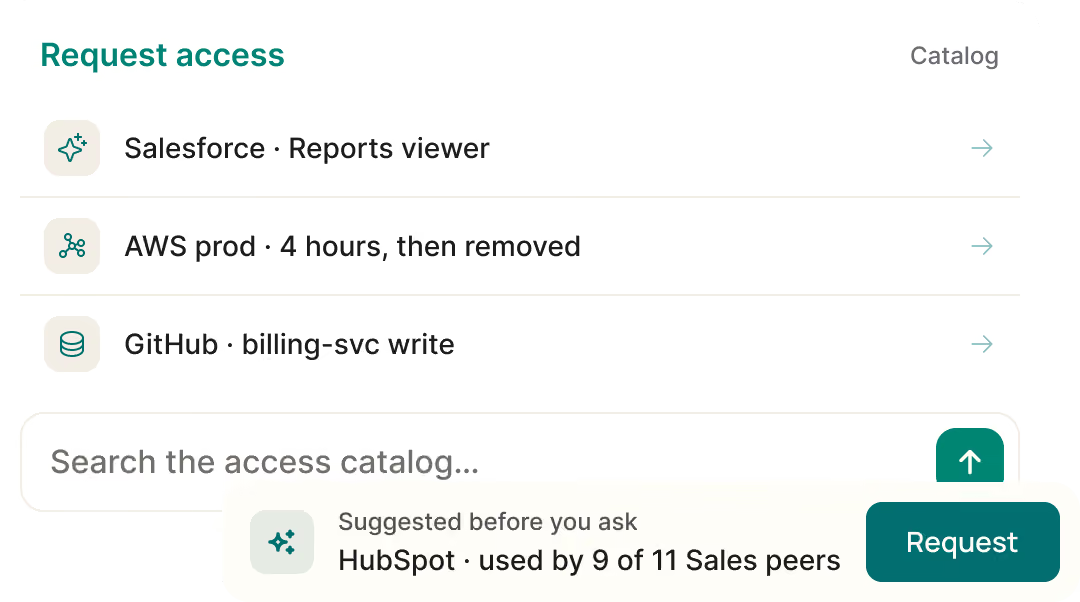

Self-service access that expires on time

Self-service catalog
Employees request apps, groups, and roles from one catalog.

Approve where you work
Approvers decide in Slack, Teams, or email.

Access that expires on time
Oleria provisions access, then removes it when time is up.
Real customers. Real results.
Security teams use Oleria to clean up excess access, get through audits faster, and bring AI agents under control


Oleria is one of those things that once you see it and get it, it’s hard to imagine doing what you’ve been doing without it.


Being able to assess the current state and optimize around least privilege provides the ROI in itself. And the ability to understand what my engineers need will help us provide least-privilege access.


Oleria gives us unparalleled visibility into identity access and usage, saving time and strengthening our compliance posture.

How is Oleria different from legacy IGA?


Questions about human identity governance
What is human identity governance (IGA)?
Human identity governance and administration (IGA) controls who can access what across your organization, from onboarding to offboarding, and proves it to auditors. Oleria does it with real usage and peer context, so access matches what each employee, contractor, and partner needs.
How is Oleria different from legacy IGA?
Legacy IGA relies on static roles and manual reviews. Oleria bases every decision on real usage and peer comparison, and deploys without a consulting engagement.
Does Oleria replace Okta or Entra ID?
No. Oleria is a governance layer on top of your existing identity providers. It connects to Okta, Entra ID, PingOne, and others, and governs access across the apps they manage.
How fast can we deploy Oleria?
Most teams connect their first systems and see insights within a day. Broad coverage follows in weeks, not quarters.
Can Oleria also govern non-human identities and AI agents?
Yes. Oleria governs human identities, NHIs, and AI agents in one platform, from the same usage and access data. See the Non-Human Identities and AI Agents pages for how each is governed.
What is the difference between IAM and IGA?
IAM (identity and access management) controls how people sign in and what they can reach. IGA governs that access over time: who should have it, who approved it, whether it is still used, and how you prove it to auditors. Oleria adds IGA on top of your IAM stack.